Chapter 1
Pressure: how concentrated a push is
The same force on a small area presses far harder than on a big one.
Stand on sand in flat shoes and you barely sink. Stand on one heel and you go straight in. Your weight didn't change: what changed was the area it was spread over. Pressure is force divided by area: P = F ÷ A.
Its SI unit is the pascal (Pa): one newton spread over one square metre. That is tiny, about the pressure of a banknote lying on a table, so we usually meet kilopascals (kPa). The air around you presses at about 101 kPa, which is called one atmosphere. Other units you will see: bar (tyres, 100 kPa), psi (pounds per square inch) and mmHg (blood pressure).
To measure it, you can divide a force by the area it pushes on, or use a pressure gauge: a spring or a bendy tube that moves further the harder it is pushed.
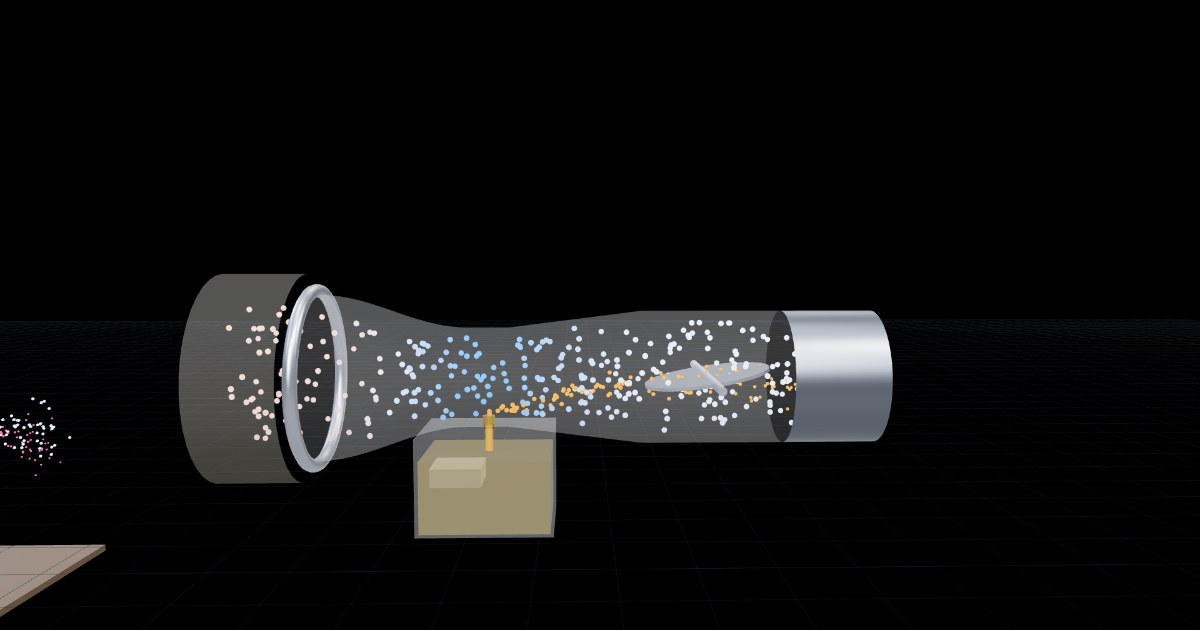
A brick weighs the same whichever way up it sits, but on its end it presses three times harder. And a person in a stiletto presses the floor far harder than an elephant: 588 N on 1 cm² beats 39,000 N on half a square metre. Pressure is also the idea behind Pascal's principle (PascalClear), Bernoulli (BernoulliClear) and the gas laws (GasLawClear).