Heat transfer: q = h × A × ΔT. Heat always flows from hotter to colder, and it travels in just three ways: by touch through solids (conduction), carried along by moving air or water (convection), and as invisible infrared light (radiation).
Heat only ever moves three ways: by touch, carried by moving air or water, or as invisible infrared light. Race copper against wood, cool a pot with a fan, feel a hot tawa's glow, watch a spoon in chai, keep a geyser hot overnight, and find out why metal only feels colder.
Heat transferOpened 27 Sept 202612 min to playFree · no sign-up
In 60 seconds
Three ways, and only three
Heat moves from hot to cold by conduction (atom to atom through a solid), convection (carried by moving air or water) or radiation (infrared light, which even crosses a vacuum). Each has its own law: q = k A ΔT ÷ d, q = h A ΔT and q = ε σ A (T⁴ − Tₛ⁴).
Materials decide conduction
Copper conducts heat about 2,700 times better than wood. That's why a silver spoon in chai can burn your fingers while a steel one stays cool, and why a wooden handle is safe to hold.
Moving fluid carries heat faster
Still air clings to a surface as a warm blanket. A fan or an air fryer strips it away, raising h four or five times; oil and water do better still.
Insulation only slows heat
Foam is mostly trapped gas, a terrible conductor. Layers add their resistances, so doubling a fridge's foam roughly halves its heat leak. Fins do the opposite: they add area to shed heat faster.
Surprises: latent heat, flasks and cold metal
Melting and boiling soak up heat without warming. A vacuum flask blocks all three routes. And metal isn't colder than wood in the same room: it pulls heat from your hand faster, so it feels colder.
Where you'll meet it
q = h × A × ΔT
heat flowing each second = heat transfer coefficient × area × temperature difference (Newton's law of cooling, for convection). Conduction follows Fourier's q = k A ΔT ÷ d, and radiation the Stefan–Boltzmann law, q = ε σ A (T⁴ − Tₛ⁴).
An air fryer's fan
Blowing 200 °C air at about 5 m/s raises the heat transfer coefficient from about 13 to about 60 W/m²K, so heat pours into the chips over four times faster than in a still oven.
About 5 cm of polyurethane foam (k = 0.022 W/m·K) lets only around 40 W of heat from a 32 °C kitchen leak into a 250 L fridge. Wood of the same thickness would let in about four and a half times as much.
A hot tank leaks heat through its foam all night, fastest at first, as Newton's law of cooling says. India's BEE star label rates exactly this leak: a 5-star 15 L tank may lose at most 0.46 kWh a day, tested with the water 45 °C above the room.
The outdoor unit pushes kilowatts of heat into the air through hundreds of thin aluminium fins and a big fan: more area A and a bigger h in q = h A ΔT.
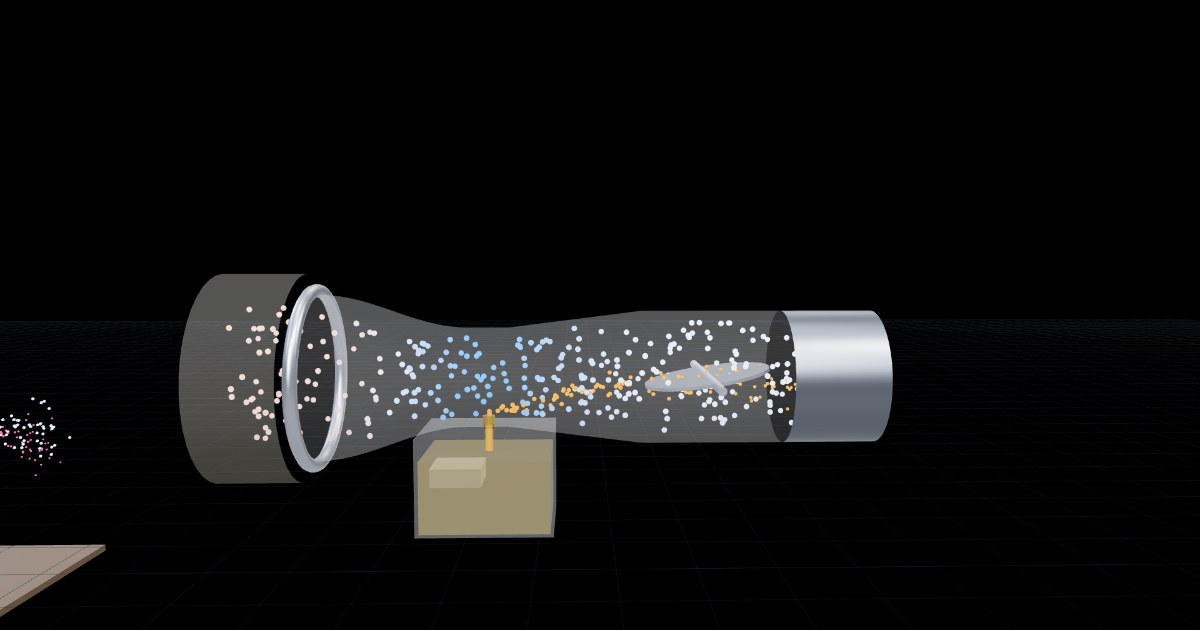
A microwave oven heats with radiation too, but not the glow of a hot object: a magnetron makes 2.45 GHz waves that shake water molecules. Conduction then carries the heat through the food.
A breeze strips away the warm layer of air on your skin, raising h, so you shed heat faster. Above about 34 °C air, though, the fan blows heat into you, and only evaporating sweat can cool you.
Each gram of sweat that evaporates carries off about 2,400 J, the body's best trick on a hot day. A clay matka cools water the same way, as water seeping through the clay evaporates from the outside.
Heat conducts up a spoon's handle while the air takes it away. Steel (k = 16) stays cool at the top; silver (k = 429) can get too hot to hold, and wood barely warms at all.
The history
From desert ice houses and clay water pots to vacuum flasks and the glowing math of Planck: how people learned the three ways heat moves.
A rod, a pot and a tawa on one bench: conduction, convection and radiation, each measured in watts.
Heat is energy on the move, and it always moves from hotter to colder by itself (why that is, see ThermoClear). This box is about how it travels. There are only three ways.
Conduction is heat passed on by touch. Fast-jiggling atoms at the hot end nudge their neighbours, which nudge theirs, all along a solid. Fourier's law says how much flows each second: q = k A ΔT ÷ d. A thicker rod (bigger A), a bigger temperature gap ΔT or a shorter path d all mean more heat. The number k, the thermal conductivity, is the material's own: copper 400, steel 16, glass 1, wood 0.15, still air 0.026 W/m·K. Metals are best because their free electrons carry heat too.
Convection is heat carried by a moving fluid, like water or air. Warm fluid is lighter, so it rises and cooler fluid sinks to take its place: a loop you can see in the pot. A fan pushes the air faster and strips heat away quicker. Newton's law of cooling sums it up: q = h A ΔT, where h grows with the flow: about 7 W/m²K in still air, over 20 with a fan.
Radiation needs nothing at all. Every warm thing glows with infrared light that you can't see but can feel, and it crosses empty space: that's how the Sun warms you. The Stefan–Boltzmann law is q = ε σ A (T⁴ − Ts⁴), with temperatures in kelvin. That fourth power is dramatic: double the kelvin and it glows 16 times as hard. Above about 525 °C, some of the glow becomes visible red.
Why a steel spoon stays cool but a silver one burns, and why a fan cooks chips faster than an oven.
Leave a spoon in hot chai and its handle is a little heat road. Heat conducts up from the chai, and all the way up, the handle loses heat to the air around it. Engineers call a shape like this a fin. What you feel at the top depends on which wins.
In steel, k is only 16 W/m·K, so heat creeps up slowly and leaks away long before it reaches your fingers. The grip stays near room temperature. Silver conducts 27 times better: heat races up and the grip can reach 70 °C. That's why old silver teaspoons were famous for burning fingers. A wooden spoon barely conducts at all.
Chips cook by convection: hot air or oil carries heat to their surface, q = h A ΔT, and then heat conducts slowly into the potato. In an oven with no fan the air sits still and h is about 13 W/m²K. An air fryer blows the air at about 5 m/s, so h jumps to about 60, and the chips cook in a fraction of the time (see AirFryerClear). Frying oil is better still, about 300, because a liquid carries far more heat than air.
Notice the chip's temperature stops at 100 °C: while there's water inside, extra heat just boils it off. The middle is cooked through in a few minutes; most of the rest of the time goes into drying the outside, because only a dried crust can get hotter than 100 °C and turn golden.
A fridge wall keeps the kitchen's heat out; a geyser's foam keeps its heat in. Neither can stop it, only slow it.
You can never stop heat from flowing from hot to cold. You can only make its road longer and harder. That is all insulation does.
A fridge wall is a sandwich: a thin steel skin, a thick layer of polyurethane (PU) foam, and a plastic liner. Heat must cross each layer in turn, and their thermal resistances simply add up: R = d ÷ k for each layer, plus a little for the still air on each side. The foam does almost all the work, because it is mostly tiny trapped bubbles of gas, and still gas is a terrible conductor. Double the foam and you halve the heat that leaks in, and halve the electricity the fridge spends pumping it back out (see FridgeClear).
A geyser (see WaterHeaterClear) has the opposite job: keep 15 litres of hot water hot. The heat it leaks with nobody using it is its standing loss. India's BEE star label is based on exactly this number. Overnight the water cools along a smooth curve, fast at first and slower as it gets closer to room temperature, just as Newton's law of cooling predicts: the flow is proportional to the difference.
Metal pipes and brackets that pass straight through the foam are thermal bridges: short, easy roads for heat. They are why real tanks leak more than the foam alone suggests.
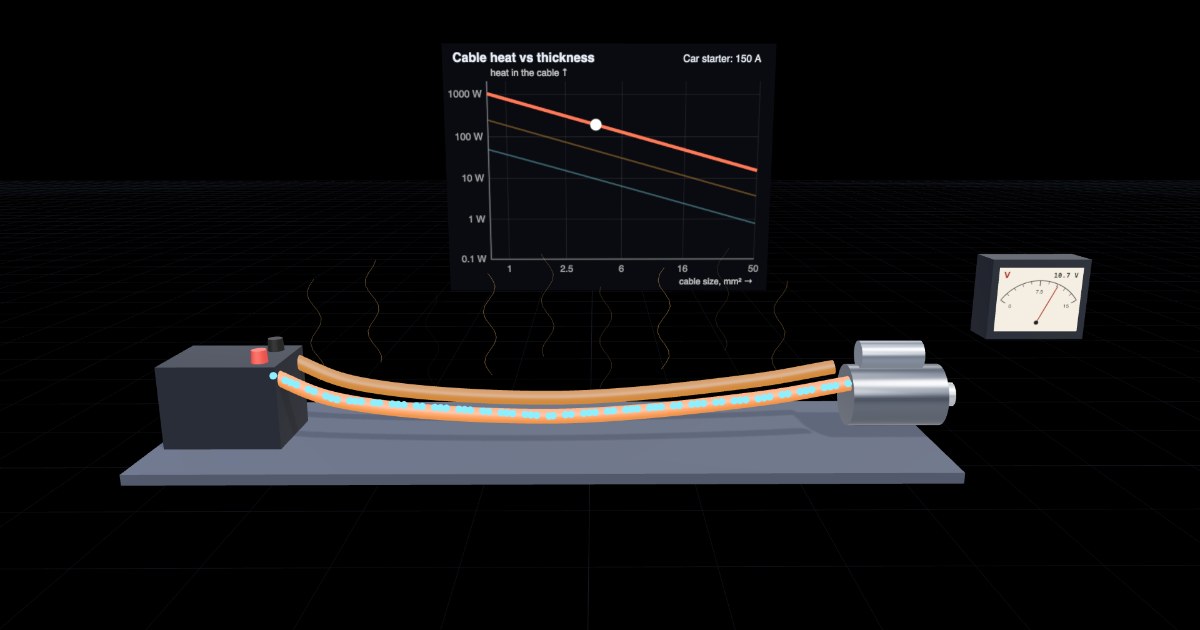
A motorbike engine grows fins, and your body sweats. Both are tricks to make q = h A ΔT bigger.
Some things make heat all the time and must get rid of it, or they overheat. Newton's law of cooling, q = h A ΔT, gives three ways to shed more: a bigger temperature difference, faster-moving air (bigger h), or more surface (bigger A).
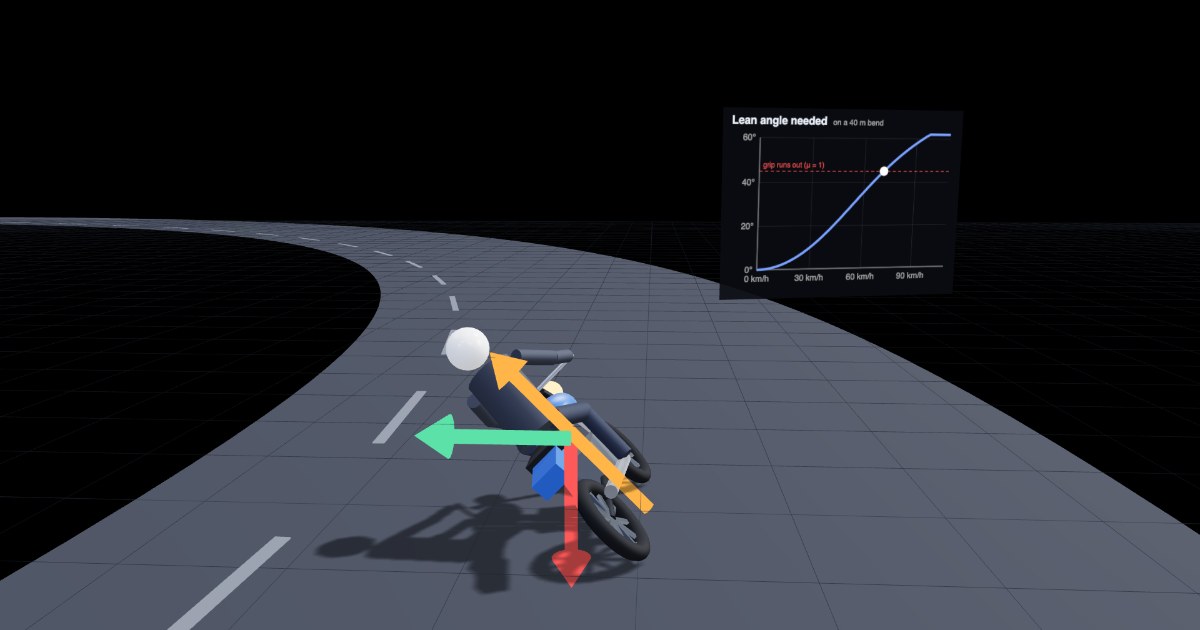
An air-cooled motorbike engine uses all three (see MotorcycleClear). Its cylinder is covered in thin fins that multiply its surface about eight times. Riding makes the wind that raises h. Stuck in traffic, the wind stops, h falls and the engine runs much hotter. The coils on an AC's outdoor unit and a fridge's back use the same idea: hundreds of thin aluminium fins and a fan (see ACClear).
Your body makes about 100 W sitting still, like a bright old bulb, and must shed it at 34 °C skin temperature. Convection and radiation work only while the air is cooler than your skin. A fan raises h, so it cools you faster: that's wind chill (see FanClear). But when the air is hotter than 34 °C, convection runs backwards and a fan blows heat into you.
Then only sweat is left. Each gram that evaporates carries off about 2,400 joules (see SkinClear). Evaporation needs dry air, so on a humid day sweat just drips. A clay matka cools water the same way: water seeps through the clay and evaporates from the outside.
Melting and boiling hold the temperature still, a flask blocks all three routes, and metal only feels colder.
Heat something and it gets hotter. Usually. Heat ice and its temperature climbs to 0 °C, then stops while it melts, even with the flame full on. Heat the water and it climbs to 100 °C and stops again while it boils. The heat is still flowing in. It goes into pulling molecules apart instead of making them jiggle faster. That hidden heat is latent heat: 334 J to melt a gram of ice and 2,257 J to boil a gram of water.
A vacuum flask blocks all three routes at once. Two glass walls with a vacuum between them: no molecules, so no conduction and no convection. The walls are silvered like a mirror, so they hardly radiate. The stopper stops evaporation. What little heat escapes creeps through the neck. Sir James Dewar invented it in 1892 to keep liquefied gases cold; the same flask keeps chai hot.
Everything warm glows in infrared, so a thermal camera can see heat: a warm hand, a leaky window, an overloaded wire. And the greenhouse effect is radiation trapped: sunlight warms the ground, the ground glows infrared, and gases like carbon dioxide and water vapour absorb some of that glow and send part of it back down. Without them, Earth would average about −18 °C.
Myth 1: "Close the door, you're letting the cold in!" There is no such thing as cold flowing. Heat flows out. Myth 2: "Metal is colder than wood." Not if they're in the same room: they're at the same temperature. Metal feels colder because it pulls heat out of your hand much faster, so your skin cools more. On a scorching day, the same metal feels hotter than wood.
A copper rod and a wooden rod of the same size join the same hot block to the same cup. Roughly how much more heat does the copper carry?
About 2,700 times as much. Fourier: q = k A ΔT ÷ d, and only k differs. Copper is 400 W/m·K and wood 0.15, so copper carries about 2,700 times more.
Why does a fan cool a hot pot faster?
It sweeps away the warm air next to the pot, so h in q = h A ΔT goes up. Still air forms a warm blanket around the pot. Moving air strips it away, raising the heat transfer coefficient h. Here it goes from about 7 to over 20 W/m²K.
A tawa goes from 300 K to 600 K (27 °C to 327 °C). How much harder does it radiate?
16 times. Radiation goes as T⁴ in kelvin. Doubling T gives 2⁴ = 16 times the glow.
A steel spoon and a silver spoon stand in the same hot chai. Why does the silver one's handle get much hotter?
Silver conducts heat about 27 times better, so heat reaches the top before it leaks away. The handle is a fin: heat conducts up while leaking out of its sides. Steel (k = 16) loses the race; silver (k = 429) wins it.
An air fryer and a fan-less oven are both at 200 °C. Why does the air fryer cook chips faster?
Fast-moving air has a much bigger heat transfer coefficient h. q = h A ΔT. Same ΔT, same A, but blown air raises h from about 13 to about 60 W/m²K, so heat flows in over four times faster.
Why does the inside of a chip stay at about 100 °C even in 200 °C air?
While water is inside, extra heat boils it away instead of raising the temperature. Boiling soaks up 2,257 J per gram. Until the water is gone, the heat goes into making steam, not into getting hotter.
You double the thickness of a fridge's foam walls. Roughly what happens to the heat leaking in?
It halves. Fourier: q = k A ΔT ÷ d. Double d and q halves (a little less than half, because the thin air films on each side don't change).
Why is foam such a good insulator?
It is mostly trapped gas, and still gas conducts heat very poorly. PU foam is over 95 % gas bubbles. Still gas has k around 0.02–0.03 W/m·K, and the bubbles are too small for the gas to circulate.
A geyser's water cools from 60 °C overnight. When does it lose heat fastest?
At the start of the night, when it is hottest. The heat flow is proportional to the difference between the water and the room. The difference is biggest at the start, so it cools fastest then.
Why does an air-cooled engine have fins?
They add surface area A, so q = h A ΔT carries away more heat. More surface means more heat handed to the air at the same temperature difference. The fins multiply the area about eight times.
The air is 40 °C. What does a fan do to you if you can't sweat?
Heats you, because the air is hotter than your 34 °C skin. Convection carries heat from hotter to colder. With air at 40 °C, faster air brings heat into your skin faster. Only evaporating sweat can cool you then.
Why does sweating cool you less on a muggy day?
Damp air can take less water vapour, so less sweat evaporates. Evaporation is driven by the gap between the vapour pressure at your skin and in the air. Humid air narrows the gap, so sweat drips instead of evaporating.
A pot of ice and water sits on a full flame. What does a thermometer in it read while ice is still left?
About 0 °C, until the ice is gone. The heat goes into melting (334 J per gram), not warming. The mix stays at 0 °C until the last ice melts.
Why does a vacuum flask have a vacuum between its walls?
With no molecules in the gap, heat can't cross by conduction or convection. Conduction and convection both need molecules. Radiation can cross a vacuum, which is why the walls are also silvered.
A steel spoon and a wooden spoon have sat in the same room all day. Why does the steel one feel colder?
It pulls heat from your fingers much faster. Both are at room temperature. Steel's high effusivity pulls heat out of your skin quickly, so your skin cools more and you feel "cold".
Words worth knowing
Conduction
Heat passed from atom to atom through touch. Fourier's law: q = k A ΔT ÷ d.
Thermal conductivity (k)
How well a material conducts heat, in W/m·K: copper 400, steel 16, wood 0.15, still air 0.026.
Convection
Heat carried by a moving fluid: natural when warm fluid rises by itself, forced when a fan or pump drives it. q = h A ΔT.
Radiation
Heat carried by light, mostly infrared. It crosses empty space and grows as the fourth power of temperature in kelvin.
Emissivity (ε)
How well a surface radiates compared with a perfect black body: about 0.9 for black iron, 0.03 for silvered glass.
Thermal resistance (R)
How hard a layer makes it for heat to pass: R = d ÷ k. Layers in a row add up.
Latent heat
Heat that melts or boils something without changing its temperature: 334 J/g for ice, 2,257 J/g for water.
Thermal effusivity
How strongly a material pulls heat from something touching it, √(kρc). It's why metal feels colder than wood.
Fork it. Teach with it.
This box is plain HTML, CSS and JavaScript, with no build step and no accounts. Run it yourself and it sends nothing anywhere. The code is MIT. The words, images and videos are CC BY 4.0, so you can reuse them anywhere if you credit “Glassbox, glassbox.how/e/heatclear”.