A hair dryer is a fan and 3 metres of hot wire in a plastic tube. Inside every hair dryer is a small motor spinning a fan, and a heating element: about 3 metres of thin nichrome wire, coiled and wound on a frame of heat-proof mica.
A hair dryer is a fan and 3 metres of hot wire in a plastic tube. Take one apart in 3D, work out its wattage from P = V²/R, watch wet hair stay cool as it dries, block the inlet until a bimetal disc snaps, and see why an RCCB matters in the bathroom.
HairDryerClearOpened 24 Sept 202612 min to playFree · no sign-up
In 60 seconds
A fan and a hot wire
Inside every hair dryer is a small motor spinning a fan, and a heating element: about 3 metres of thin nichrome wire, coiled and wound on a frame of heat-proof mica. Air goes in at the back, through the hot coil, and out of the nozzle.
Heat from resistance
Nichrome resists current about 60 times more than copper, so electrons bumping through it make heat. At a fixed voltage the power is P = V²/R: on 230 V a 29 ohm element gives 1,800 W. A diode or a second element in series halves that for the Low setting.
Hot, fast air
About 18 litres of air a second soak up that heat. From ΔT = P/(ṁ·cp) it warms by about 85 °C, leaving the nozzle near 110 °C and cooling to about 50 °C by the time it reaches hair 15 cm away.
Why wet hair stays cool
Evaporating each gram of water takes about 2,400 joules. While hair is wet it sits near the wet-bulb temperature, and moving, warm, dry air carries in heat and carries away vapour fastest. That is why a monsoon day slows everything down.
Guards against overheating
Block the inlet and less air takes the same heat, so it gets much hotter. A bimetal disc snaps open at about 140 °C and cuts the heater; if that fails, a thermal fuse melts for good.
Water, shocks and the bill
A dryer dropped in the bath can drive a deadly 0.2 A through someone in it, far too little to trip an MCB. A 30 mA RCCB spots the leak and cuts the power in milliseconds. Running costs are small: 1.8 kW for 8 minutes is about 0.24 kWh, under ₹2.
The history
From a gas-fed salon hood in 1888 to brushless dryers spinning at 110,000 rpm, and the safety rules that stopped them killing people in the bath.
A fan, a hot coil of wire and a few clever safety parts, in a plastic tube.
A hair dryer is really just two things in a tube: a fan that pushes air, and a heater that warms it. Everything else is there to control them or to keep you safe.
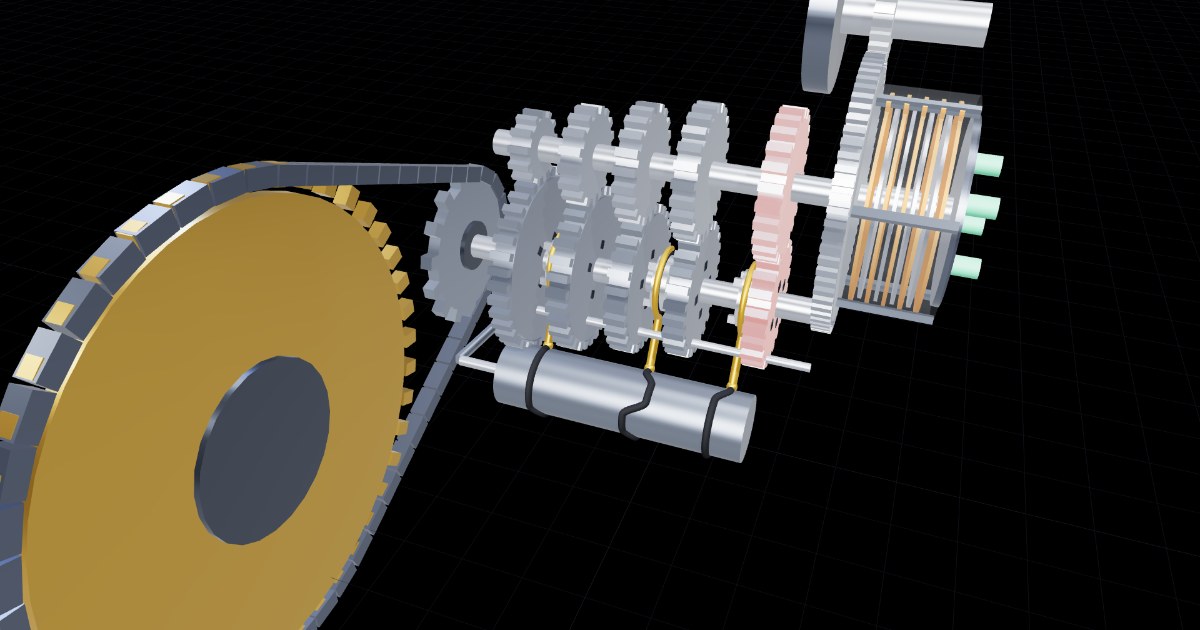
Air comes in at the back through the inlet grille and a fine lint filter that keeps hair and fluff out. A small motor, usually a DC motor fed through four rectifier diodes, or a brushed universal motor, spins the fan. The air then flows through the heating element: thin nichrome wire, coiled and wound round a cross-shaped frame of mica, an insulating mineral that doesn't mind heat. A typical dryer's element is rated 1,200 to 2,000 watts.
Clipped to the frame are two guards. A thermal cutout, a little disc of bimetal, snaps open and cuts the heater if the air gets too hot. A thermal fuse melts for good if even that fails. A heat shield keeps the plastic cool. At the front, a concentrator nozzle squeezes the air into a flat, fast jet. In the handle sit the switches, a diode for the low-heat setting and the cord.
The fan motor is a cousin of the one in FanClear. A brushed motor makes tiny sparks as it spins, which is why an AM radio can crackle while a dryer runs nearby (see RadioClear, FMClear and TVStationClear for how broadcasts travel).
Push current through a stubborn wire and it gets hot: P = V² ÷ R.
Metal wires carry current by letting electrons drift through them. In copper they slip through easily. In nichrome they keep bumping into atoms, and every bump shakes the atoms a little harder. That shaking is heat. The harder a wire resists, the more it heats for the current it carries. This is Joule heating.
At a fixed mains voltage the power is P = V² ÷ R. On India’s 230 V an element of 29.4 Ω gives 230 × 230 ÷ 29.4 = 1,800 W. The resistance comes from the wire: R = ρ × L ÷ A. Nichrome’s resistivity ρ is about 63 times copper’s, so about 3.2 m of 0.4 mm wire makes that 29 Ω. A lower resistance means more power, not less: shorten the wire and it gets hotter. Room heaters and toasters use the very same trick (see RoomHeaterClear and OhmsLawClear).
For Low, many dryers slip in a diode, a one-way valve for current. Mains current flows forwards and backwards 50 times a second; the diode lets only the forward halves through, so the heater is on half the time and gives half the power. Others add a second element in series: double the resistance, half the power. Cool turns the heater off and leaves the fan running.
The heat balance ΔT = P ÷ (ṁ × cp), and why speed matters as much as heat.
The fan pushes about 18 litres of air a second through the dryer. That is about 21 grams. Every gram of air needs about 1 joule to warm it by 1 °C (its specific heat, cp). So 1,860 W of heat raises it by ΔT = P ÷ (ṁ × cp) = 1,860 ÷ (0.021 × 1,006) ≈ 87 °C. Air leaves the nozzle at about 110 °C, then mixes with room air, so at 15 cm it is nearer 50 °C.
Drying is evaporation: water molecules escaping into the air. Each gram of water needs about 2,400 joules to turn into vapour, its latent heat. That heat has to come from the air, so while hair is wet it stays cool, stuck near the wet-bulb temperature, the same trick that cools you when you sweat (see HeatClear).
Three things speed it up: hotter air carries more heat in; faster air scrubs away the damp, still layer next to each hair; and drier air has more room for vapour. That is why hair dries slowly on a sticky monsoon day. A concentrator makes a narrow, fast, hot jet; a diffuser spreads the air out and slows it right down.
Block the inlet and the dryer overheats. A bimetal disc and a fuse step in.
A dryer only stays safe because its air carries the heat away. Cover the inlet with a towel, a hand, or a filter matted with hair, and the fan can push much less air. The heater still makes 1,800 W, so the same heat goes into less air: from ΔT = P ÷ (ṁ × cp), half the air means twice the temperature rise. The coil, with less air to cool it, climbs from about 400 °C towards a red glow.
The first guard is the thermal cutout: a small dished disc made of bimetal, two metals bonded together that expand by different amounts. When it gets too hot, at about 140 °C in a typical dryer, the disc snaps the other way and pushes a contact open. The heater stops. When it cools to about 100 °C it snaps back, so an overheating dryer blows warm, then cold, then warm again.
If the cutout fails, say its contacts have welded shut, the thermal fuse is the last resort. It holds a pellet or alloy that melts at a set temperature, here 184 °C, and breaks the circuit for good. A dryer that dies after overheating often has a blown fuse, and it needs a repair, not a bypass.
Hydrogen bonds, keratin coils, and where heat starts to do damage.
A hair is mostly keratin, a protein twisted into long springy coils (α-helices) packed in bundles. Outside is the cuticle, overlapping scales like roof tiles. Two kinds of link hold the coils in shape. Disulfide bonds are strong; water doesn’t touch them. Hydrogen bonds are weak and many, and water breaks them.
That is the secret of a blow-dry. Wet hair has lost many hydrogen bonds, so it bends easily round a brush. As it dries in that shape the bonds re-form and hold it there: the style is set. On a humid day, water creeps back in, breaks them again, and the style drops.
Heat is fine up to a point. Wet keratin starts to denature, its coils unravelling, at about 145 to 150 °C; dry hair holds out to about 230 °C. Water trapped inside a hot, wet hair can even boil into bubbles: researchers made this “bubble hair” with a faulty dryer blowing 175 °C air. A normal dryer’s air is 40 to 60 °C at 15 cm, far below that, but held 5 cm away it can reach about 95 °C, and in one study that cracked the cuticle after 30 dries. The same study found that gentle drying from 15 cm did less harm than letting hair stay wet for hours. Flat irons (180 to 230 °C) are the real risk.
Ionic dryers (some with tourmaline) spray negative ions that can cancel the positive static charge that makes hair fly apart. The physics is sound, but the effect is small, and there is no good evidence they dry hair faster. A diffuser dries curls gently with slow, spread-out air; a concentrator aims hot, fast air along the hair for a smooth finish.
Why a dryer in the bath can kill, how an RCCB saves you, and what a dry costs.
Water and mains electricity don’t mix. Tap and bath water carry dissolved salts, so they conduct. Drop a plugged-in dryer in the bath and current leaks from its live parts through the water, and through anyone sitting in it, to earth. A wet body can have a resistance of only about 1,000 Ω, so 230 V pushes about 230 mA through it. Around 30 mA through the chest can stop the heart.
An ordinary MCB won’t help: it trips at many amps, to stop wires overheating. An RCCB (a residual-current circuit breaker) compares the current going out on the live wire with the current coming back on neutral. If more than 30 mA is missing, it must be leaking somewhere, maybe through a person, and the RCCB cuts the power within about 40 milliseconds. India’s safety rules require earth-leakage protection on bigger home installations, and a 30 mA RCCB on the bathroom circuit is good practice everywhere. In the USA, hair dryers have had shock protection built into the plug since 1991. See MCBClear.
So: keep dryers away from filled basins and baths, never reach for one that has fallen in (switch off at the wall first), don’t wrap the cord tightly round the handle, and bin a dryer with a cracked cord or a burning smell. Clean the lint filter often.
And the bill? Energy is power × time. An 1,800 W dryer used for 8 minutes uses 1.8 kW × 8/60 h = 0.24 kWh, about ₹1.70 at ₹7 a unit.
Push air with a fan and heat it with a hot wire. A fan pushes air through a heating element. Hot, fast air dries hair.
Why is the heating wire wound on sheets of mica?
Mica is a heat-proof insulator that holds the bare wire safely. The wire is bare and very hot. Mica doesn’t burn or conduct electricity, so it holds it in place safely.
What is the lint filter at the back for?
To stop hair and fluff being sucked into the fan and heater. A clogged or hairy fan means less air, and less air means a hotter, less safe dryer. Clean it often.
On 230 V, which element gives more heat: 20 Ω or 40 Ω?
20 Ω: P = V²/R, so less resistance means more power. At fixed voltage, P = V²/R. 230²/20 = 2,645 W; 230²/40 = 1,323 W.
How does a diode give the Low setting?
It lets current through only on half of each AC cycle, halving the power. A diode is a one-way valve. It blocks the backwards halves of the AC wave, so the heater is on half the time.
Why is the element made of nichrome and not copper?
Nichrome resists current about 60 times more and survives red heat without burning away. A copper coil the same size would be a near short circuit, and hot copper oxidises quickly. Nichrome makes a protective chromium-oxide skin.
A dryer puts 1,800 W into 0.02 kg of air each second (cp ≈ 1,000 J/kg°C). About how much hotter does the air get?
90 °C. ΔT = P ÷ (ṁ × cp) = 1,800 ÷ (0.02 × 1,000) = 90 °C.
Why does wet hair feel cool even in hot air?
Evaporating water soaks up latent heat, holding the hair near the wet-bulb temperature. Each gram of water needs about 2,400 J to evaporate. Until it has gone, most of the heat goes into that.
Why does hair take longer to dry on a humid monsoon day?
The air already holds a lot of vapour, so the wet-bulb temperature is higher and less water can escape. Humid air is nearly full of vapour. The gap between air temperature and wet-bulb temperature shrinks, and so does drying.
Why does covering the inlet make the air hotter?
Less air flows, so the same power heats less air by more. ΔT = P ÷ (ṁ × cp). If ṁ, the air flow, halves, ΔT doubles.
How does a bimetal cutout switch off the heater?
Two bonded metals expand differently, so the disc snaps over and opens a contact. The metals grow by different amounts when heated. The dished disc flips at its set temperature.
What is the difference between the cutout and the thermal fuse?
The cutout resets itself when cool; the fuse melts once and must be replaced. The cutout is the everyday guard. The fuse is the last resort if the cutout fails.
Why does a blow-dry style “set” as the hair dries?
Hydrogen bonds broken by water re-form, holding the new shape. Water breaks hydrogen bonds. Drying in a shape lets them re-form in that shape, until humidity breaks them again.
Wet or dry: which hair is damaged by heat at a lower temperature?
Wet hair: water lowers the temperature at which keratin unravels. Wet keratin denatures near 145–150 °C, dry near 230 °C. Trapped water can also boil into bubbles.
What does the evidence say about ionic dryers?
Negative ions may reduce static a little; faster drying isn’t proven. The physics of cancelling static is sound, but the effect is small and good studies of faster drying are missing.
Why doesn’t an ordinary MCB save someone when a dryer falls in the bath?
The current through a person, about 0.2 A, is far below the many amps an MCB needs to trip. A 16 A MCB guards the wiring against overload. A deadly 0.2 A leak is nowhere near enough to trip it.
What does an RCCB actually measure?
The difference between the current going out on live and coming back on neutral. Any difference is leaking somewhere, maybe through a person. Over 30 mA and it trips in milliseconds.
A 2,000 W dryer runs for 6 minutes. How much energy does it use?
0.2 kWh. 2 kW × 0.1 h = 0.2 kWh, about ₹1.40 at ₹7 a unit.
Words worth knowing
Heating element
A coil of high-resistance wire that turns electrical energy into heat.
Nichrome
An alloy of about 80% nickel and 20% chromium with high resistance that survives red heat without burning away.
Joule heating
Heat produced when current flows through resistance: P = I²R = V²/R.
Diode
A one-way valve for current. In a dryer it passes half of each AC cycle to give half power.
Specific heat
The energy needed to warm 1 kg of a substance by 1 °C; about 1,006 J for air.
Latent heat
The energy that turns liquid water into vapour without warming it: about 2.4 MJ per kg.
Wet-bulb temperature
The temperature a wet surface cools to while water evaporates from it.
Bimetal cutout
A switch made of two bonded metals that bends or snaps open when it gets too hot.
RCCB
A breaker that trips when current leaks to earth, usually at 30 mA, fast enough to protect people.
Fork it. Teach with it.
This box is plain HTML, CSS and JavaScript, with no build step and no accounts. Run it yourself and it sends nothing anywhere. The code is MIT. The words, images and videos are CC BY 4.0, so you can reuse them anywhere if you credit “Glassbox, glassbox.how/e/hairdryerclear”.