What is combustion?

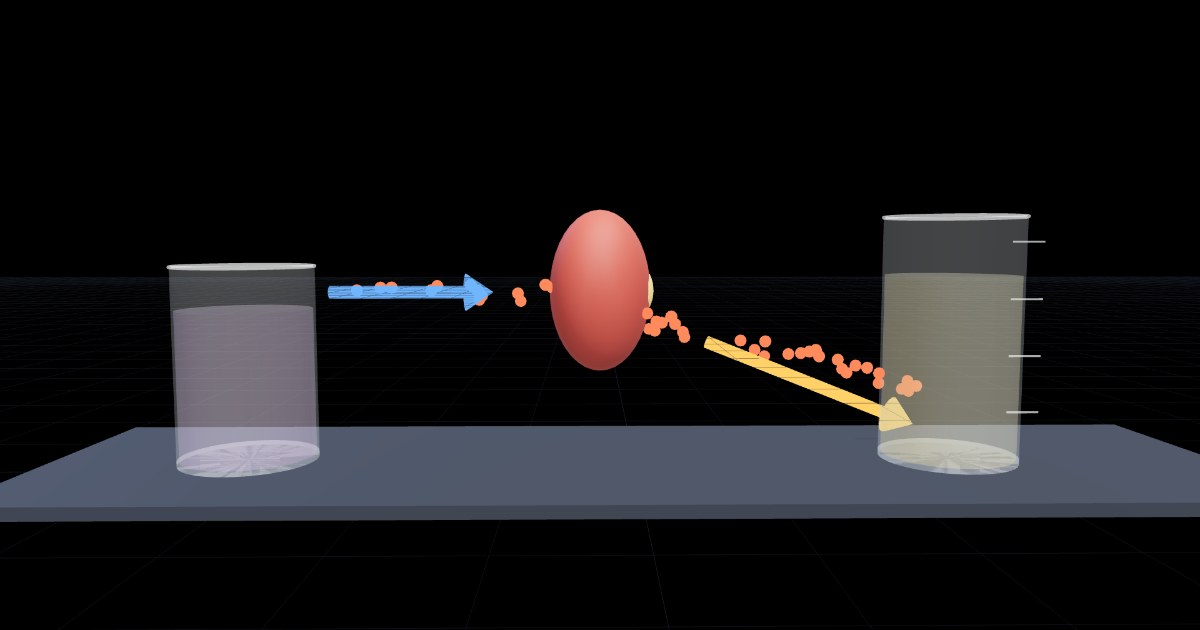
Combustion and conservation of mass: fuel + O₂ → CO₂ + H₂O + heat. When something burns, it joins with oxygen from the air and its atoms regroup into new substances, mostly carbon dioxide and water, releasing heat. A fuel made of carbon and hydrogen joins with oxygen.

Burn a gas in a sealed jar on a balance and the reading doesn't budge: every atom is still there, just with new partners. Count them, weigh an LPG cylinder's 43 kg of CO₂, tune an engine's 14.7 : 1 mixture, put out a fire, and find out why lost fat leaves through your lungs.

Combustion and conservation of massOpened 27 Sept 202613 min to playFree · no sign-up

In 60 seconds

  1. Burning swaps partners

    A fuel made of carbon and hydrogen joins with oxygen. Every carbon ends up in CO₂ and every hydrogen in H₂O: CH₄ + 2 O₂ → CO₂ + 2 H₂O. The atoms are the same on both sides, so the mass is too.

  2. Gases weigh more than the fuel

    The oxygen comes from the air, so the products outweigh the fuel. A 14.2 kg LPG cylinder makes about 43 kg of CO₂, and a litre of petrol, 0.74 kg, makes about 2.3 kg.

  3. Air decides how clean it burns

    Petrol needs 14.7 g of air per gram. With too little, carbon stops at carbon monoxide or soot: a yellow flame, a dirty exhaust, or a deadly room. A catalytic converter needs the mixture just right.

  4. Fire and your body

    Take away fuel, heat or oxygen and a fire goes out. Your cells run the same reaction slowly: about 84 % of the fat you lose is breathed out as CO₂.

  5. The limits

    A candle only seems to vanish, because it is an open system. E = mc² does take away about one part in 10 billion of the mass, far too little for any balance, so for chemistry mass is conserved.

Where you'll meet it

fuel + O₂ → CO₂ + H₂O + heat

burning joins a fuel with oxygen and swaps the atoms' partners, so the mass of fuel + oxygen going in equals the mass of carbon dioxide + water coming out. For methane: CH₄ + 2 O₂ → CO₂ + 2 H₂O, 16 g + 64 g = 44 g + 36 g

The history

From a million-year-old campfire to the Keeling Curve: how people learned that burning destroys nothing.

Read the full history
  1. 1000000 BCEAsh deep inside a cave
  2. 1756Lomonosov's sealed flasks
  3. 1774Tin in a sealed retort
  4. 1958Measuring the CO₂ we make

The full explanation

Combustion and conservation of mass, chapter by chapter

Chapter 1

Burning makes nothing vanish

Burn gas, petrol or wood in a sealed jar on a balance. Count the atoms, then weigh them.

Combustion is fast burning: a fuel joins with oxygen and gives out heat and light. The fuels we burn most are made of carbon and hydrogen. When they burn, every carbon atom ends up in carbon dioxide (CO₂) and every hydrogen atom in water (H₂O).

For methane, the gas in a kitchen pipeline: CH₄ + 2 O₂ → CO₂ + 2 H₂O. Count them: one carbon, four hydrogens and four oxygens on each side. Burning only swaps partners. No atom is made and none is destroyed, so the mass can't change either. That's the law of conservation of mass: in a closed system, grams in = grams out.

So why does a candle seem to shrink away to nothing? Because in the open, its products are invisible gases that float off, and the oxygen it takes comes from the air. Seal it in a jar and the balance doesn't budge. Antoine and Marie-Anne Lavoisier proved this with careful sealed-vessel experiments in the 1770s and 1780s.

Each fuel carries a different amount of energy: about 50 MJ per kg for methane, 46 for LPG, 44 for petrol and only 16 to 18 for dry wood, which already contains a lot of oxygen.

Try “Nothing is lost” in the interactive model →

Chapter 2

A gas cylinder makes three times its weight in CO₂

The LPG hob and its chimney, and steel wool that gets heavier as it burns.

The gas hob. A 14.2 kg LPG cylinder holds mostly butane, C₄H₁₀. Burn it all and you make about 43 kg of carbon dioxide and 22 kg of water vapour. How can 14.2 kg become 65 kg? Every carbon atom picks up two oxygen atoms from your kitchen air, and oxygen is heavy. The cylinder also used up about 51 kg of oxygen, from roughly 220 kg of air.

That's why a kitchen needs a chimney or an exhaust fan (see ChimneyClear). An hour on a big burner adds about half a kilogram of CO₂ and a quarter of a litre of water to the room. With the windows shut and no hood, CO₂ can climb to several thousand ppm, enough to feel stuffy and sleepy.

Blue or yellow? A blue flame gets enough air mixed in before it burns, so the carbon burns right through. Starve it and specks of carbon, soot, glow yellow, blacken the pan and some carbon monoxide escapes.

Iron that gets heavier. Light a pad of steel wool on a balance and it sinks: the iron joins oxygen to make iron oxide, which weighs more. Rusting is the same reaction, only slow. This was Lavoisier's big clue: burning doesn't release something, it takes in oxygen.

Try “In the kitchen” in the interactive model →

Chapter 3

A litre of petrol makes 2.3 kg of CO₂

Inside a petrol engine: the 14.7 : 1 mixture, lean and rich, and the catalytic converter.

A car or motorbike engine is a combustion chamber that burns a tiny puff of petrol and air thousands of times a minute (see CarClear and MotorcycleClear). The hot gas pushes the piston down, and the burnt gas leaves through the exhaust.

Petrol is made of carbon and hydrogen, roughly CH₁.₈₇. To burn each gram completely it needs about 14.7 grams of air. That's the stoichiometric ratio, and engine computers aim for it all the time, using an oxygen sensor in the exhaust.

Now weigh it. A litre of petrol is only 0.74 kg, but it makes about 2.3 kg of CO₂ and 0.9 kg of water. The carbon picks up oxygen from nearly 11 kg of air. Most of what comes out of the tailpipe is actually nitrogen from that air, passing straight through.

Rich (too little air, λ below 1) leaves carbon monoxide and unburnt fuel (HC). Lean (spare air) runs hot and makes NOx, from nitrogen and oxygen joining in the heat. The catalytic converter is a honeycomb coated with platinum, palladium and rhodium. At λ = 1 it turns CO and HC into CO₂ and water, and NOx back into nitrogen. It can't remove the CO₂, though: that is the fuel's carbon, and it has nowhere else to go.

Try “Engines” in the interactive model →

Chapter 4

Put out a fire, and breathe out your lunch

The fire triangle and how extinguishers break it, and why lost fat leaves through your lungs.

The fire triangle. A fire needs three things at once: fuel, heat and oxygen. Take away any one and it goes out. Water takes away heat: each kilogram soaks up about 2.6 MJ as it warms and boils into steam. CO₂ from an extinguisher pushes the oxygen out: below about 15 % oxygen (air has 21 %) most flames die. A fire blanket or a lid on a burning pan does the same by cutting off the air.

Never throw water on burning oil. The water sinks, flashes into steam in an instant and throws the burning oil everywhere. Put a lid on it and turn the gas off.

Your body burns too, slowly. Your cells combine food with the oxygen you breathe: C₆H₁₂O₆ + 6 O₂ → 6 CO₂ + 6 H₂O, exactly the same reaction as burning sugar in a flame. The energy comes out in small steps, as chemical energy your cells can use, and as body heat, not as fire.

So where does fat go when you lose weight? Chemists Ruben Meerman and Andrew Brown followed every atom in 2014: about 84 % leaves as CO₂ through your lungs, and 16 % as water. Your lungs are the main exit for lost weight (see LungsClear). Breathing harder doesn't help, though: only the energy you actually use burns fat.

Try “Fire and you” in the interactive model →

Chapter 5

Vanishing candles, E = mc², and a silent killer

Where mass only seems to go, where a tiny bit really does, and why incomplete burning kills.

The vanishing candle. A candle on a balance gets lighter all evening, so it looks as if burning destroys matter. It doesn't: it's an open system. The wax leaves as invisible CO₂ and water vapour, and those gases weigh more than the wax, because they carry oxygen from the air.

Myth-buster: phlogiston. In the 1700s chemists said burning things give off phlogiston, a “fire substance”. A candle getting lighter seemed to prove it. But burnt metals get heavier, so phlogiston would need negative weight. The Lavoisiers weighed everything in sealed vessels and showed that burning takes in oxygen. Phlogiston was never real.

E = mc². Here's the honest fine print. When anything gives out energy, it loses a tiny bit of mass: Δm = E ÷ c². For burning, that is about one part in 10 billion, far too small for any balance to see. Chemistry conserves mass to better than we can measure; nuclear fission changes about 0.1 % of the mass, which is why it's millions of times more powerful.

The silent killer. With too little air, carbon burns only halfway, to carbon monoxide. CO has no smell or colour, and it grabs your blood's haemoglobin more than 200 times as tightly as oxygen. Every winter, people in India die after sleeping with a charcoal angithi or a gas heater in a closed room. Never burn anything in a shut room, and never sleep with it.

Try “Surprises and limits” in the interactive model →
Test yourself

Frequently asked

Methane burns in a sealed jar on a balance. What does the balance show?

It stays the same. Nothing gets in or out of a sealed jar. The atoms only regroup into CO₂ and water, so the total mass stays the same.

How many O₂ molecules does one CH₄ need to burn completely?

2. CH₄ + 2 O₂ → CO₂ + 2 H₂O. Carbon needs two oxygen atoms and four hydrogens need two more: four oxygen atoms, which is two O₂.

A candle burns in the open and gets lighter. Where did the mass go?

Into invisible CO₂ and water vapour that drifted away. The wax atoms join oxygen from the air and float away as gases. Those gases weigh more than the wax burned, because they include the oxygen.

A 14.2 kg LPG cylinder makes about 43 kg of CO₂. Where does the extra mass come from?

From oxygen in the kitchen air, which joins the carbon. Each carbon atom (12 units) leaves as CO₂ (44 units), carrying two oxygen atoms from the air. So the gases weigh about three times the fuel.

Why does a gas flame turn yellow when its air holes are blocked?

Unburnt specks of carbon (soot) glow yellow. Without enough oxygen mixed in, some carbon doesn’t burn. Tiny glowing soot particles make the yellow light, and more carbon monoxide escapes.

Steel wool burns on a balance. What happens to the reading?

It goes up. Iron joins oxygen from the air to make iron oxide, a solid that stays on the pan. It weighs more than the iron did.

A litre of petrol weighs 0.74 kg. About how much CO₂ does it make?

About 2.3 kg. Each carbon atom leaves with two oxygen atoms from the air, so the CO₂ weighs about three times the petrol’s carbon: about 2.3 kg per litre.

What does an air–fuel ratio of 14.7 : 1 mean?

14.7 g of air for every gram of petrol. It is by mass: 14.7 g of air has just enough oxygen to burn 1 g of petrol completely.

Why must a catalytic converter run near λ = 1?

Rich, there is no spare O₂ to burn CO and HC; lean, it can’t take oxygen off NOx. A three-way catalyst needs a balance: just enough oxygen to finish CO and HC, and not so much that NOx can’t give its oxygen up.

A CO₂ extinguisher puts out a fire mainly by…

Pushing the oxygen away, so the air around the fire has too little to burn. CO₂ dilutes the air. Below about 15 % oxygen, most flames can’t keep going. It breaks the oxygen side of the fire triangle.

When you lose 10 kg of fat, where does most of it go?

Breathed out as CO₂. Meerman and Brown traced the atoms: about 8.4 kg leaves as CO₂ through the lungs and 1.6 kg as water. Mass is never turned into energy in chemistry.

Why is water good at putting out a wood fire?

It soaks up a lot of heat, especially as it boils into steam. Heating and boiling 1 kg of water takes about 2.6 MJ, pulling the fuel below the temperature it needs to keep burning.

Why did phlogiston theory fail?

Burnt metals get heavier, so phlogiston would need negative weight. If burning released phlogiston, everything should get lighter. Metals gain weight as they burn, because they take in oxygen, as the Lavoisiers showed.

Burning 1 kg of methane gives out 55 MJ. By E = mc², how much mass does that heat carry away?

About 0.6 µg (millionths of a gram). Δm = E ÷ c² = 55.5 × 10⁶ ÷ (3 × 10⁸)² ≈ 6 × 10⁻¹⁰ kg, 0.6 µg: about one part in 10 billion of what reacted, far below what a balance can detect.

Why is a charcoal angithi dangerous in a closed bedroom?

As air runs short, carbon burns only to carbon monoxide, which you can’t see or smell. With little fresh air, CO builds up to deadly levels. It binds to haemoglobin far more tightly than oxygen does, and sleeping people don’t notice.

Words worth knowing

Combustion
A fast reaction of a fuel with oxygen that gives out heat and light.
Conservation of mass
In a closed system, the total mass stays the same through any chemical reaction.
Balanced equation
A reaction written with the same number of each kind of atom on both sides.
Closed and open systems
A closed system lets no matter in or out; an open one, like a candle in a room, swaps matter with its surroundings.
Air–fuel ratio
Mass of air per mass of fuel. Petrol burns completely at 14.7 : 1.
Incomplete combustion
Burning with too little oxygen, which leaves carbon monoxide and soot.
Heating value
Heat from burning 1 kg of fuel: about 50 MJ for methane, 46 for LPG, 44 for petrol and 16 to 18 for dry wood.
Fire triangle
Fuel, heat and oxygen: a fire needs all three.

Fork it. Teach with it.

This box is plain HTML, CSS and JavaScript, with no build step and no accounts. Run it yourself and it sends nothing anywhere. The code is MIT. The words, images and videos are CC BY 4.0, so you can reuse them anywhere if you credit “Glassbox, glassbox.how/e/combustionclear”.

git clone https://github.com/bdeeps/combustionclear.git

Built with three.js (MIT), Geist, Instrument Serif (SIL OFL 1.1).

←→ previous / next box · / search

Would you like to see the full page, with the interactive model?