Chapter 1
From idea to cinema in five stages
Walk a film can across the studio lot, and see how long each stage takes and how many people it needs.
Every film, from a phone short to a ₹500 crore epic, goes through the same five stages. Development turns an idea into a script and finds the money. Pre-production plans every shot, person and prop. Production is the shoot. Post-production edits, adds effects, sound and colour. Distribution gets it to cinemas and phones.
The shoot is the famous part, but it is often the shortest. A feature can shoot in 40 to 90 days, then spend half a year or more in post. A typical feature takes one to three years from first draft to release, and some take much longer.
Animated films run the same pipeline, but the "shoot" is replaced by animating, lighting and rendering, frame by frame. Each craft gets its own box later: StoryboardClear and ConceptArtClear for planning, CineCameraClear, LightingClear and SFXClear for the shoot, and EditClear, VFXClear and GradeClear for post, each coming in its own box.
Try “The pipeline” in the interactive model →
Chapter 2
Why still pictures seem to move
Flip frames at 6 to 60 a second, spin a zoetrope, and find out what your brain is really doing.
A film is a string of still photographs, called frames. Cinema shows 24 frames every second. Nothing on the screen ever moves: each picture just replaces the last one.
You may have heard this works by persistence of vision, images lingering on your eye. That is a myth. Lingering images would blur together, not move. The real reason is your brain’s motion detectors: when something jumps a short way in a short time, they report “it moved”. Psychologists call this apparent motion. Max Wertheimer’s two flashing lights (1912), the phi phenomenon, show it with nothing but two dots. Seeing one object glide between them is called beta movement.
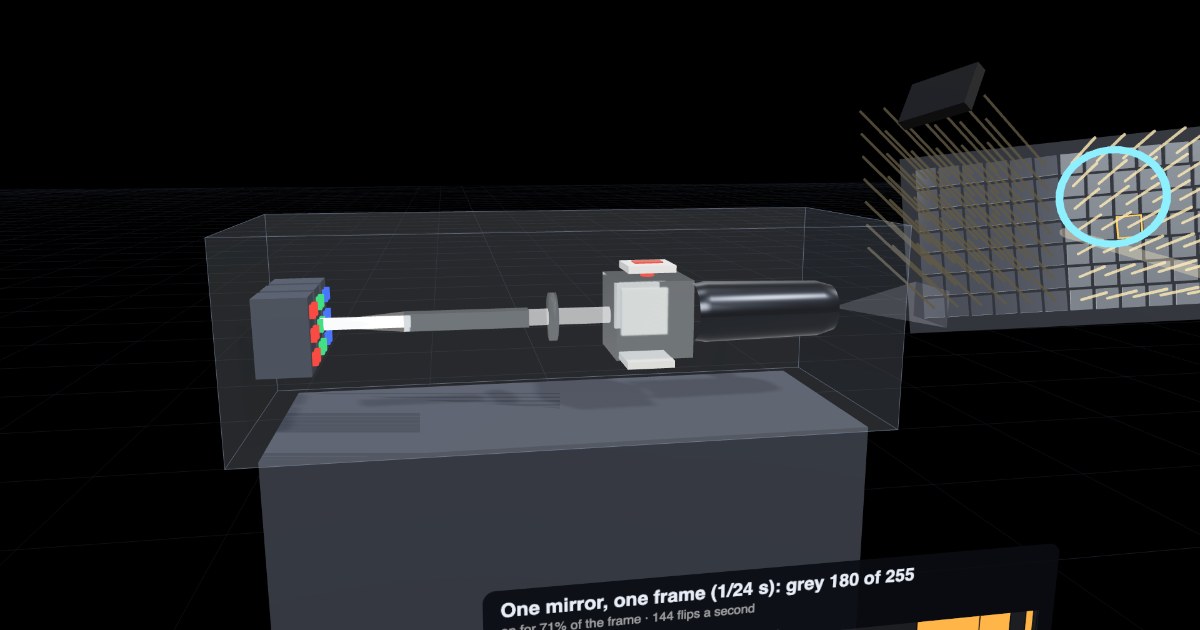
Slow the frames and motion turns jerky. 24 fps became the standard when sound arrived, because a soundtrack needs one fixed speed. A cine camera’s shutter is open for only part of each frame. With a 180° shutter each frame gets 1/48 s at 24 fps, and a moving thing smears a little: motion blur. That blur makes 24 fps look smooth, not stuttery. More on shutters in CineCameraClear, and on how the projector flashes each frame in ProjectorClear, each coming in its own box.
Try “The frame” in the interactive model →
Chapter 3
A day on a film set
Meet the crew, run a take, and line up picture and sound with the clapperboard.
A film set is a crowd of specialists, each with one job. The director leads. The director of photography (DoP) designs the light and the camera work, and the gaffer builds the lighting. The sound recordist and the boom operator capture the voices. The script supervisor keeps track of every take, and the clapper loader looks after the camera’s film or cards.
On most film sets the picture and sound are recorded on separate machines. So how do they match up later? The clapperboard. It shows the scene and take number to the camera. Then its sticks snap shut: the camera sees the exact frame where they close, and the microphone hears one sharp spike. Slide the sound until the spike sits on that frame, and the whole take is in sync. Today timecode does most of this, but crews still clap to check.
Get it wrong by even a few frames and lips stop matching words. Tests for TV found most people notice when sound is about 45 ms early or 125 ms late, that is one or three frames at 24 fps. Cameras and lighting go deeper in CineCameraClear and LightingClear, microphones in FilmSoundClear, and rain machines and breakaway glass in SFXClear, each coming in its own box.
Try “On set” in the interactive model →
Chapter 4
Where the film is really made
Cut a hundred hours down to two, drop in VFX, set the colour and mix the sound.
After the shoot, the film exists only as a mountain of rushes: every take of every shot. A feature can shoot 100 hours or more to make a two-hour film. Footage shot divided by running time is the shooting ratio.
The editor watches it all, picks the best moments and joins them on a timeline: picture on top, sound tracks below. A modern film cuts to a new shot every 3 to 5 seconds, so two hours holds about 1,500 to 2,500 shots. Then the VFX team replaces green screens, adds crowds or wipes out wires. Avengers: Endgame had about 2,500 VFX shots, and so did Baahubali 2.
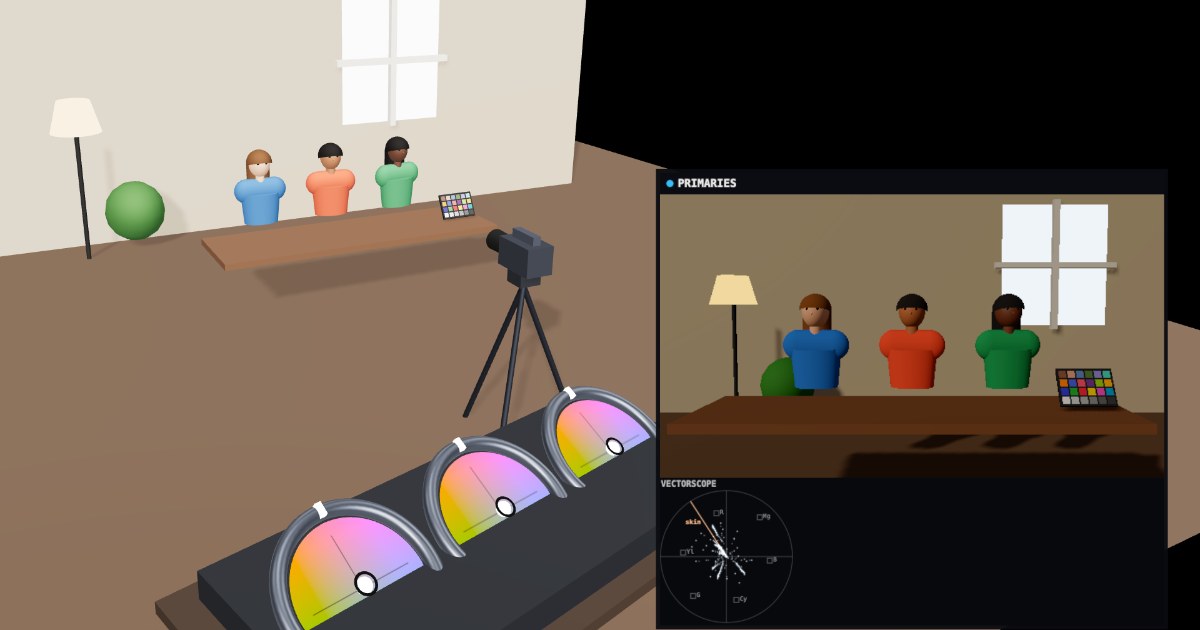
The colourist grades every shot so they match and set the mood. The sound team cleans the dialogue, adds footsteps and doors (Foley), and mixes it with the music so the words always come through. Each of these gets its own box, coming soon: EditClear, VFXClear, CGIClear, GradeClear and FilmSoundClear.
Try “Post” in the interactive model →
Chapter 5
Who pays, and who gets to watch
Split a budget, count India’s films, follow the money from cinemas to OTT, and read a censor certificate.
A film’s budget has two halves. Above the line pays for the story and the big names: writers, director, producers and stars. Below the line pays for making it: crew, sets, costumes, equipment and locations. Then come post and VFX, and often a huge marketing bill. In star-led Indian films the stars’ fees can be the biggest slice. In Hollywood blockbusters VFX and marketing loom large.
India makes more films than any other country: 1,724 feature films in 2013, against 738 in the USA, and more than 1,796 releases in 2023, in dozens of languages. Indian films earned about ₹19,700 crore in 2023, and ₹12,000 crore of that came from cinema tickets at home. The rest came from OTT streaming and TV rights, overseas release and ads. Many films now reach OTT a few weeks after the cinema run.
Before release in India, every film needs a certificate from the CBFC (the Central Board of Film Certification). Since 2024 the grades are U, UA 7+, UA 13+, UA 16+, A and S. How the picture reaches the big screen is its own story, in ProjectorClear, coming in its own box.
Try “Money & audience” in the interactive model →
Chapter 6
Make a five-shot film with a phone
Build a shot list, frame each shot, and learn the two rules that make a scene cut together.
You can make a real film with a phone. Start with a tiny scene: two friends having tea. Then plan a shot list of five shots, the same grammar every film uses.
A wide shot shows where we are. A medium shot shows people talking, waist up. A close-up shows a face and a feeling. A cut-away shows a detail, like the tea, and is handy for hiding a cut. A reaction shot shows the listener, and often says the most.
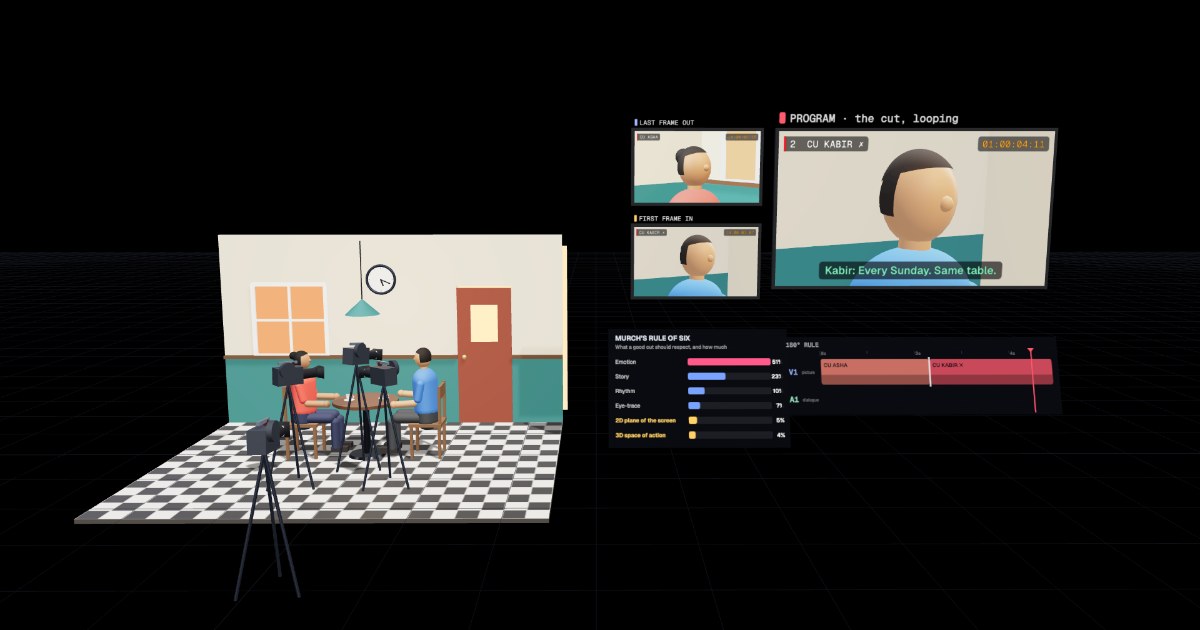
Two rules help it cut together. The rule of thirds: put eyes and horizons near the lines that divide the frame in thirds. The 180° rule: draw an imaginary line through your two actors and keep the phone on one side of it. Cross it and they swap sides of the screen, and the viewer loses track of who is looking at whom.
Phone tips: shoot sideways (landscape), at 24 or 30 fps, lock focus and exposure, hold each shot for five seconds or more, and record sound close to the speakers. Planning shots is the craft of StoryboardClear, and joining them is EditClear, each coming in its own box.
Try “Your first film” in the interactive model →