How does homeopathy work?

Dilute a remedy 1 in 100, shake it, and repeat thirty times. Count the molecules with Avogadro's number, watch them run out at 12C, find out why 30C would need 10¹⁵ oceans to hold one, then run a fair test against a dummy pill.

HomeopathyClearOpened 24 Sept 202614 min to playFree · no sign-up

In 60 seconds

  1. A gentler medicine, from 1790

    Samuel Hahnemann took cinchona bark while healthy, felt fever-like symptoms, and built homeopathy on it. Around 1800 doctors bled patients and gave mercury purges, so gentle remedies caught on, and homeopathy reached India in the 1830s.

  2. Like cures like, as homeopathy describes it

    Homeopathy teaches that a substance that causes symptoms in a healthy person, found in "provings", treats similar symptoms in the sick. A long consultation matches one remedy to the whole person, in the smallest dose.

  3. Dilute and shake until nothing is left

    Each C step is 1 part in 100 with hard shaking. A mole holds 6.022 × 10²³ molecules, so by 12C most bottles hold none, and 30C would need about 10¹⁵ Earth oceans to hold one. "Water memory" failed blinded tests.

  4. From plant to sugar pill

    A mother tincture is plant material soaked in alcohol. Insoluble things are ground with milk sugar. Drops of the dilution are soaked into sugar globules, and a repertory links symptoms to remedies.

  5. What fair tests show

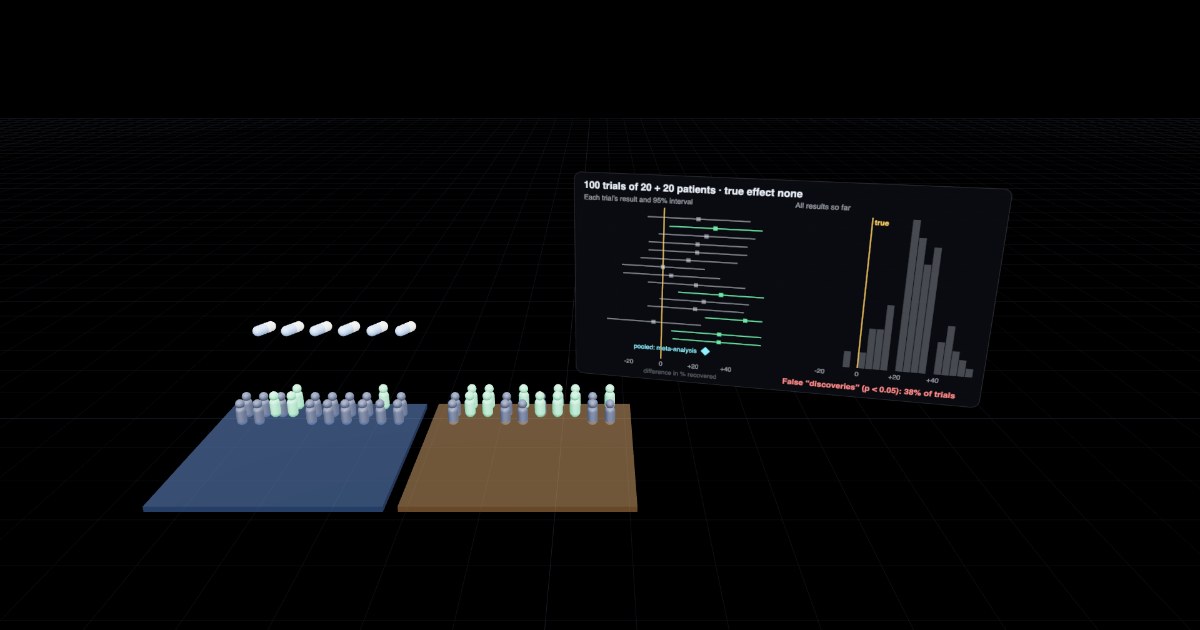
    Many people get better anyway, and people visit healers on their worst days. Randomised, blinded trials compare with a dummy pill. Australia's NHMRC found no condition with reliable evidence it beats placebo; homeopaths and India's CCRH dispute this.

  6. Use it wisely

    The pills themselves carry little risk; delaying real treatment does. Never stop prescribed medicine, see a qualified doctor for serious illness, and keep vaccines up to date. Many choose homeopathy to feel heard: an Indian GP visit averages about 2 minutes.

The history

From a German doctor's dose of bark in 1790 to one of India's official systems of medicine, tested along the way by chemistry and clinical trials.

Read the full history
  1. 1790The cinchona bark experiment
  2. 1829Honigberger at the Lahore court
  3. 1973Homoeopathy Central Council Act
  4. 1988"Water memory" in Nature
  5. 2015Australia's NHMRC review

The full explanation

HomeopathyClear, chapter by chapter

Chapter 1

A doctor who wanted gentler medicine

Samuel Hahnemann, a dose of cinchona bark in 1790, the Organon of 1810, and how homeopathy grew in India.

Homeopathy is a system of medicine started in Germany by a doctor named Samuel Hahnemann (1755–1843). It is used by millions of families today, especially in India. To understand it, start with the medicine of his time.

Around 1800, doctors often drained blood (bloodletting), gave strong purges made with mercury, and raised blisters on the skin. These treatments often did more harm than good. Hahnemann was so unhappy that he stopped practising and earned his living translating medical books.

In 1790, while translating a book by the Scottish doctor William Cullen, he doubted Cullen's reason for why cinchona bark treated malaria fever. He took the bark himself and reported fever-like symptoms. From this he came to believe that a substance that causes symptoms in a healthy person can cure similar symptoms in a sick one. He published the idea in 1796, coined the word "homeopathy" (Greek for "similar suffering") by 1807, and set out the full system in his book the Organon in 1810.

Two notes from science. Others who repeated the bark test did not reliably get the same symptoms. And the bark really does fight malaria, because it contains quinine, found in 1820, which kills the malaria parasite in the ordinary way drugs work.

Homeopathy reached India in the 1830s, when the doctor J. M. Honigberger worked at Maharaja Ranjit Singh's court in Lahore, and it grew fast in Bengal. Today it is one of India's official AYUSH systems, with its own degree (BHMS), research council (CCRH) and regulator (NCH), and more than 3.4 lakh registered practitioners. Sister boxes: AyurvedaClear, UnaniClear and MedicineClear.
Try “Where it came from” in the interactive model →

Chapter 2

Like cures like, as homeopathy describes it

Similars, provings, the whole-person consultation, one remedy at a time, and the smallest dose.

This chapter explains homeopathy in its own terms, the way its books and teachers describe it. What the scientific evidence says comes later, in chapter 5.

Like cures like (in Latin, similia similibus curentur). Homeopathy teaches that a substance which causes certain symptoms in a healthy person can, in a special diluted form, treat similar symptoms in a sick person. Cutting a red onion makes your eyes and nose stream, so the onion remedy, Allium cepa, is described for colds and hay fever with streaming eyes and nose.

How are these "symptom pictures" found? By provings: healthy volunteers take a substance and write down every change they notice in a diary. The collected symptoms form the materia medica. India's research council, CCRH, still runs proving studies.

Then case-taking. A homeopath asks about much more than the main complaint: sleep, mood, food cravings, what makes things better or worse. The aim is to find the one remedy whose picture best matches the whole person. Two people with the same cold may be given different remedies. Classical homeopathy gives a single remedy at a time, in the minimum dose, prepared by the dilution and shaking you'll see in the next chapter.

A fair note: vaccines are sometimes compared with "like cures like", but they work differently. A vaccine holds a measured amount of a germ's parts that immune cells can detect, and it makes antibodies you can measure (see ImmuneClear).

Try “The ideas” in the interactive model →

Chapter 3

Potentisation: dilute, shake, repeat

A real dilution calculator. Watch the molecules run out, and see how much water you would need to find just one.

Homeopathic remedies are made by potentisation. Take 1 drop of the starting liquid, add 99 drops of water or alcohol, and shake hard with firm knocks. That is 1C, a dilution of 1 in 100. Hahnemann knocked the bottle on a leather-bound book; this shaking is called succussion. Repeat: 2C is 1 in 10,000, 6C is 1 in 10¹², 30C is 1 in 10⁶⁰. (The X scale uses 1 in 10 per step, so 24X equals 12C.) Homeopathy teaches that each step makes the remedy stronger.

Chemistry lets us count what is left. A mole of anything holds 6.022 × 10²³ particles (Avogadro's number). Start with a whole mole in a litre, 58 g of table salt, which homeopathy calls Natrum muriaticum. Each C step divides the count by 100. At 12C you expect only 0.6 of a molecule per litre: most bottles have none at all.

The maths for 30C: 6.022 × 10²³ ÷ 10⁶⁰ = 6 × 10⁻³⁷ molecules per litre. To expect one molecule you'd need 1 ÷ (6 × 10⁻³⁷) ≈ 1.7 × 10³⁶ litres. Earth's oceans hold about 1.3 × 10²¹ litres, so that is about 10¹⁵ oceans, a ball of water about 147 million km across, nearly the distance from Earth to the Sun. 200C is 1 in 10⁴⁰⁰, far more than the roughly 10⁸⁰ atoms in the whole visible universe. Hahnemann couldn't have known this: the first estimate of molecule numbers came in 1865, after he died.

So how could a remedy act? Some homeopaths propose water memory: water keeps an imprint of what was dissolved in it. In 1988 Jacques Benveniste's lab reported such an effect in Nature, but when the tests were repeated blind, it vanished, and later labs could not repeat it. Physics adds that the hydrogen bonds holding water molecules together break and re-form about every picosecond (a millionth of a millionth of a second), so there is no lasting structure to store a pattern. Water has also touched countless other substances. Some researchers, including a 2010 IIT Bombay team, reported tiny particles of the starting metal in some high potencies, but this has not been shown to cause any effect in patients.

Try “Dilute and shake” in the interactive model →

Chapter 4

From plant to sugar pill

Mother tinctures, grinding with milk sugar, medicated globules, and the repertory a homeopath uses to choose.

Most homeopathic remedies start as a mother tincture, marked Ø. Fresh or dried plant material, such as red onion or the flowers of Arnica, is chopped and left to soak in alcohol for days or weeks, then pressed and filtered. India's official standard, the Homoeopathic Pharmacopoeia of India, says how each one is made.

Some starting materials don't dissolve: metals, minerals, oyster shell (Calcarea carbonica). These are triturated: ground with 99 parts of milk sugar (lactose) in a mortar. Hahnemann described about an hour of grinding per step. After three steps the powder can be dissolved and diluted like a liquid (chapter 3).

You rarely swallow the liquid itself. Tiny white globules, made of cane sugar, are wetted with a few drops of the diluted remedy in strong alcohol and left to dry. So a 30C pill is sugar that was moistened with a liquid expected to hold no molecule of the starting substance.

How does a homeopath pick a remedy? With a repertory: a huge index that lists symptoms, called rubrics, and under each the remedies linked to it in provings. J. T. Kent's repertory (1897) is still used, often through software, including programs made in India. The homeopath combines the patient's rubrics to find the remedy that covers most of them. In India, homeopathic medicines are licensed under the Drugs and Cosmetics Act.

Try “Making remedies” in the interactive model →

Chapter 5

What fair tests show

A trial simulator, why people feel better anyway, what the big reviews found, and safety.

People often say, "I took it and I got better." That is real, and it matters. But many illnesses get better on their own, and a caring consultation can make us feel better too (the placebo effect). To know whether a remedy adds anything, we need a fair test.

A fair test compares two groups chosen at random: one gets the remedy, the other an identical-looking dummy pill (a placebo). Ideally it is double-blind: neither patients nor doctors know who got which, so hopes can't tip the result. Only the difference between the groups belongs to the remedy. MedicineClear has a full trial simulator.

There's a sneaky effect too: regression to the mean. People visit a healer on their worst days. Symptoms go up and down, so after a very bad day the next days are usually better, whatever you take.

What the big reviews found. Australia's NHMRC (2015) looked at 176 studies across 61 conditions and found no health condition with reliable evidence that homeopathy works better than placebo. A 2005 Lancet analysis by Shang and colleagues found that the larger, better trials showed effects compatible with placebo. NHS England stopped routinely funding it in 2017. Homeopaths dispute these reviews: they argue that individualised treatment is hard to test this way, and one 2014 review suggested small effects, though from low-quality evidence. India's CCRH runs its own trials and reports positive results; most are small and have not been repeated independently.

Safety. A 30C remedy contains essentially nothing, so the pill itself poses little direct risk. The real dangers are delaying effective treatment for serious illness (the WHO warns against homeopathy for HIV, TB, malaria, flu and infant diarrhoea), and low-dilution or badly made products: in 2017 the US FDA found far too much toxic belladonna in some homeopathic teething tablets.

Try “The evidence” in the interactive model →

Chapter 6

Using homeopathy wisely

Keep taking prescribed medicine, see a doctor for serious illness, keep vaccines up to date, and why people value it.

Many Indian families use homeopathy alongside other kinds of medicine. Whatever you choose, a few rules keep everyone safe. This page explains; it cannot tell you what is right for your own body. For that, see a qualified doctor.

Never stop prescribed medicine on your own, such as insulin, asthma inhalers, epilepsy or blood-pressure medicine. Stopping can be dangerous. Tell every doctor and practitioner everything you take.

For serious illness, go to a qualified doctor quickly: high fever that won't settle (dengue and malaria are common in India), trouble breathing, chest pain, a child who is floppy or not drinking, or a wound that is getting worse. In an emergency call 112 or 108. Delay is the biggest real risk of any alternative treatment.

Vaccines hold measured parts of a germ that train your immune system, and they are tested in huge trials (see ImmuneClear). Homeopathic "prophylaxis" has not been shown to protect like a vaccine, and even the UK Faculty of Homeopathy says it should not replace vaccination. In 2020 India's AYUSH ministry suggested the remedy Arsenicum album 30 against the new coronavirus; there was no trial evidence that it prevents COVID-19. India's protection came from vaccines: more than 220 crore doses. India has also been polio-free since 2014 thanks to vaccination.

So why do people choose homeopathy? Often for good human reasons: a long, unhurried consultation where they feel heard (an average Indian GP visit lasts about 2 minutes), gentle pills with few side effects, low cost, and family tradition. Those are real needs, and good medicine should meet them too. Compare with AyurvedaClear, UnaniClear, SiddhaClear, NaturopathyClear and MedicineClear.

Try “Using it wisely” in the interactive model →

Test yourself

Frequently asked

What did Hahnemann do with cinchona bark in 1790?

Took it himself while healthy and noted his symptoms. He took the bark while healthy and reported fever-like symptoms. That test led to his idea of "like cures like".

Why does cinchona bark really help against malaria?

It contains quinine, which kills the malaria parasite. Quinine, isolated in 1820, attacks the malaria parasite directly. That is how ordinary drugs work.

Which of these was common medicine around 1800?

Bloodletting and mercury purges. Doctors drained blood and gave harsh purges. Hahnemann rejected them as harmful, which helps explain why his gentle method became popular.

In homeopathy, what does "like cures like" mean?

A substance that causes symptoms in a healthy person is used for similar symptoms in a sick one. That is the principle of similars, similia similibus curentur, as Hahnemann described it.

What is a "proving"?

Healthy volunteers taking a substance and recording their symptoms. Provings build the symptom pictures of the materia medica. Reviews found many were low quality, and people on placebo also reported symptoms.

Why might two people with the same cold get different homeopathic remedies?

Homeopathy matches the remedy to the whole person, not just the disease name. Individualised case-taking looks at the person's whole symptom picture, including sleep, mood and what makes things better or worse.

What does 30C mean?

Diluted 1 in 100, thirty times over: 1 in 10⁶⁰. Each C step is 1 in 100. Thirty steps make 100³⁰ = 10⁶⁰.

Starting with a whole mole, at about which potency do you expect less than one molecule per litre?

12C. A mole is 6 × 10²³ molecules. 12C divides by 10²⁴, leaving about 0.6 per litre.

What happened when Benveniste's 1988 "water memory" experiment was repeated blind?

The effect disappeared. Under blinded conditions, watched by a team from Nature, the effect vanished, and later labs could not repeat it.

What is a mother tincture?

The starting liquid, made by soaking plant material in alcohol. The mother tincture (Ø) is the plant extract in alcohol that the dilutions start from.

What are homeopathic globules mostly made of?

Sugar. They are sugar pills (sucrose or lactose) wetted with a liquid potency and then dried.

What does a repertory help a homeopath do?

Look up which remedies are linked to a set of symptoms. A repertory is an index of symptoms (rubrics), each listing the remedies linked to it.

Why does a fair test need a placebo group?

Because many people get better anyway, and only the difference shows the remedy's own effect. Without a comparison group you can't separate the remedy from natural recovery, regression to the mean and the placebo effect.

What did Australia's NHMRC review (2015) conclude?

No health condition had reliable evidence that homeopathy works better than placebo. It reviewed 176 studies on 61 conditions and found no reliable evidence of effectiveness for any of them.

What is the biggest safety risk with highly diluted remedies?

Delaying effective treatment for a serious illness. The pills contain essentially nothing, but using them instead of proven treatment for serious illness can be dangerous.

You take a prescribed medicine and want to try homeopathy too. What should you do?

Keep taking it and tell your doctor what else you take. Never stop prescribed medicine on your own. Tell every practitioner everything you take.

Can homeopathic "prophylaxis" replace a vaccine?

No: it has not been shown to protect, and vaccines have. Vaccines are proven in large trials to prevent disease. Even the UK Faculty of Homeopathy says homeopathy should not replace vaccination.

Which is a common reason people say they choose homeopathy?

Long consultations where they feel listened to. Many value the time and attention. An average primary care visit in India lasts about 2 minutes.

Words worth knowing

Homeopathy
A system of medicine founded by Samuel Hahnemann around 1796, built on "like cures like" and highly diluted remedies.
Similia similibus curentur
"Let like be cured by like": homeopathy's principle that what causes symptoms in the healthy treats them in the sick.
Proving
A test in which healthy volunteers take a substance and record their symptoms.
Potentisation
Repeated dilution with vigorous shaking (succussion). 30C means 1 part in 10⁶⁰.
Avogadro's number
6.022 × 10²³, the number of particles in one mole of a substance.
Mother tincture (Ø)
The starting liquid for a plant remedy: plant material soaked in alcohol and filtered.
Repertory
An index of symptoms, each listing the remedies linked to it.
Placebo
A dummy treatment. Fair tests compare a remedy with one to see if it adds anything.
Regression to the mean
After an unusually bad day, the next ones tend to be closer to normal, with or without treatment.

Fork it. Teach with it.

This box is plain HTML, CSS and JavaScript, with no build step and no accounts. Run it yourself and it sends nothing anywhere. The code is MIT. The words, images and videos are CC BY 4.0, so you can reuse them anywhere if you credit “Glassbox, glassbox.how/e/homeopathyclear”.

git clone https://github.com/bdeeps/homeopathyclear.git

Built with three.js (MIT), Geist, Instrument Serif (SIL OFL 1.1).

←→ previous / next box · / search

Would you like to see the full page, with the interactive model?